

Francis Ford Coppola’s decades-in-the-works fantasy epic Megalopolis received its wide release this past weekend, and I saw it as soon as I could. This film got a notoriously strange buzz at the Cannes Film Festival, with some viewers seeing it as a masterpiece and others as the ravings of an elderly lunatic. This is one of the most polarizing films I can remember, which should be reason alone for any fan of cinema to see the film.
Megalopolis is so ambitious and overstuffed that I can confidently say it has most of what good movies have, but it also has just about everything bad (or even so-bad-they’re-good) movies have.
Does it have good acting? Of course. With a cast including Adam Driver, Dustin Hoffman, Jon Voight, Aubrey Plaza and Giancarlo Esposito, it’d be difficult to not get a single good performance out of the ensemble. Does it have weird acting choices and inconsistent accents? It has them in spades luckily.
Does it have ambitious and dramatically compelling themes? Of course. Are these themes often stated directly by characters, even moments after a character tells another not to state his philosophy directly? Of course.
Megalopolis takes place in an alternate New York City called New Rome. The film opens on an exterior of Grand Central Station and overall the movie makes great use of the city’s neo-classical architecture. The bulk of the movie centers around a conflict between two characters – brilliant scientist/architect Cesar Catilina (Adam Driver) and New Rome Mayor Frank Cicero (Giancarlo Esposito). The plot centers around the development and construction of utopian city-within-the-city, Megalopolis, made possible by the creation of a new building material, Megalon.

The biggest problem the movie has is that it’s never clear what Megalopolis actually is, and thus you’re never positive what Cesar’s vision is. It’s introduced to us as a futuristic solution to all modern problems, though it is presented as not much more than a chromatic version of Hudson Yards, with self walking sidewalks and park access promised within five minutes. Caesar denounces Cicero as a slumlord, but later we see that the very creation of this new city makes life worse for New Rome’s poorest. Of course, the commoners are not characters, but props in this movie. Despite all the importance they play in the story, their voices are rarely heard when not manipulated, and the focus of the story is fully on the city’s elite – whether it’s Catilina, Cicero, Cesar’s uncle Crassus (Jon Voight), or Crassus’ grandson Clodio (Shia Labeouf). You’re just supposed to take it at face value that Caesar has the people’s best interest at heart, though the only character who even makes attempts at galvanizing the people is Clodio, who is portrayed as both Hitlerian and a communist. We’re supposed to see Cicero as selling out the city and getting in the way of Caesar’s grand vision, but there isn’t really anything to suggest Cicero is in the wrong in the text. Its all just off the vibe.
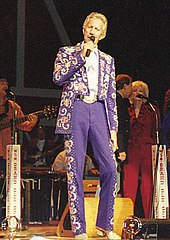
As one can tell from the character names, Coppola is trying to retell a story from Rome’s history, specifically the Catilinarian conspiracy, which was foiled by Cicero. Coppola also aims for visual parallels between the modern nightclub scene and the famous Roman orgies of yesteryear. The decadent costumes are meant to evoke Rome, but might end up reminding a viewer more of The Hunger Games, and Jon Voight’s wardrobe definitely had me thinking of Porter Wagoner’s famous Nudie suits. I would say that the costuming is a definite highlight all the same, really helping add to how over the top everything feels. If nothing else the movie had me wanting to invest in a good cape.
Megalopolis wears its influences on its sleeve, usually quite sloppily. There’s a recreation of one of the most famous shots of Charles Laughton’s The Night of the Hunter that we see numerous times. Adam Driver even delivers the entirety Hamlet’s “To be or not to be” soliloquy to really drive home the movie’s theatricality in a scene that was painfully long. There are very obvious Trump/January 6 parallels. Most frustrating for me, though, was a blatant parallel to the assassination of Thomas Becket, which was dealt with so haphazardly. The last third of the movie is mostly abstract yearning shots of what the future could be like that I think would have made more sense if I was on a heavy dosage of a psychedelic. You get the sense coherence was not high on Coppola’s list of needs when putting this picture together.

Despite being in development for about 40 years, the movie feels surprisingly incomplete. Even at well over two hours, the film feels like there are scenes missing. Characters will disappear for about 45 minutes only to pop back up and be incredibly important all of a sudden. Several scenes will just begin or end seemingly at random. Several plot points are raised and solved within a five minute timeframe, never to be dealt with again. For example, a character played by a prominent actor was told to kill another character. The next we see of him is in a brief flashback in which a building falls on top of him, so I guess he’s dead now and has a statue made in his honor. This is never explained, expounded upon, or revisited. We just keep it pushin.
The movie is a bizarre experience. It’s quite entertaining, but genuinely baffling to watch. There are too many weird aspects to get into in detail, but I’ll just provide one plot point that I found astoundingly odd. A minor character is introduced as a pop star who will perform a song at a big event at Madison Sq Garden. An announcer asks for pledges for her to maintain her virginity for some reason, with donations presumably going towards the good of New Rome. As it goes on, it becomes clear that it’s not people pledging money and seems more like an auction. At any rate, Clodio pipes in a doctored sex-tape of her and Caesar (which we didn’t know existed prior to this). It’s supposed to be a big deal because she made her entire public persona as a modern-day vestal virgin. The event is ruined and Caesar is briefly jailed, but its quickly revealed that she is in fact not a minor and the sex-tape was doctored, so nobody suffers any consequences in the end. This is the first and only time she is referenced in the film, and there isn’t even a mention of the controversy or the money raised after this. We just keep it pushin.
While I thought this movie was quite bad, it’s absolutely fascinating all the same. You should see it, and hopefully you can see it in an environment that maintains the audience participation aspect. My showing didn’t do that, but I’m pretty sure I know where it was supposed to occur.
The movie is such a weird vision. At times, it’s visually beautiful. At other times, it looks like any b-movie you’d see on Prime or Tubi. Narratively and thematically, the movie is all over the place, but there is still plenty to enjoy. I could see a world where it garners a Rocky Horror or The Room style cult following, with people dancing along and reciting the film’s iconic lines, soaking in the debauchery like Wow Platinum herself. Yes it is an old man using his dying breath to say that quote on quote “Great Men” should be allowed to have sex with whomever they want, but it is as visually stunning a movie you’ll see this year, and Coppola still has something to say about the depravity of modern life and mankind’s future all the same. Maybe I just need to watch it another ten times to really unlock the secret of the Megalon to get what Coppola is really going for.

It was also my immediate reaction that this needs to be the new The Room or Rocky Horror. I want to see this movie at least once a year, but with a live audience and where I’m allowed to yell at the screen.
Everyone is calling the movie an overindulgent and pretentious mess and I’m just here saying “yeah, isn’t it great!”